
Taxation in Paraguay: The Complete Guide
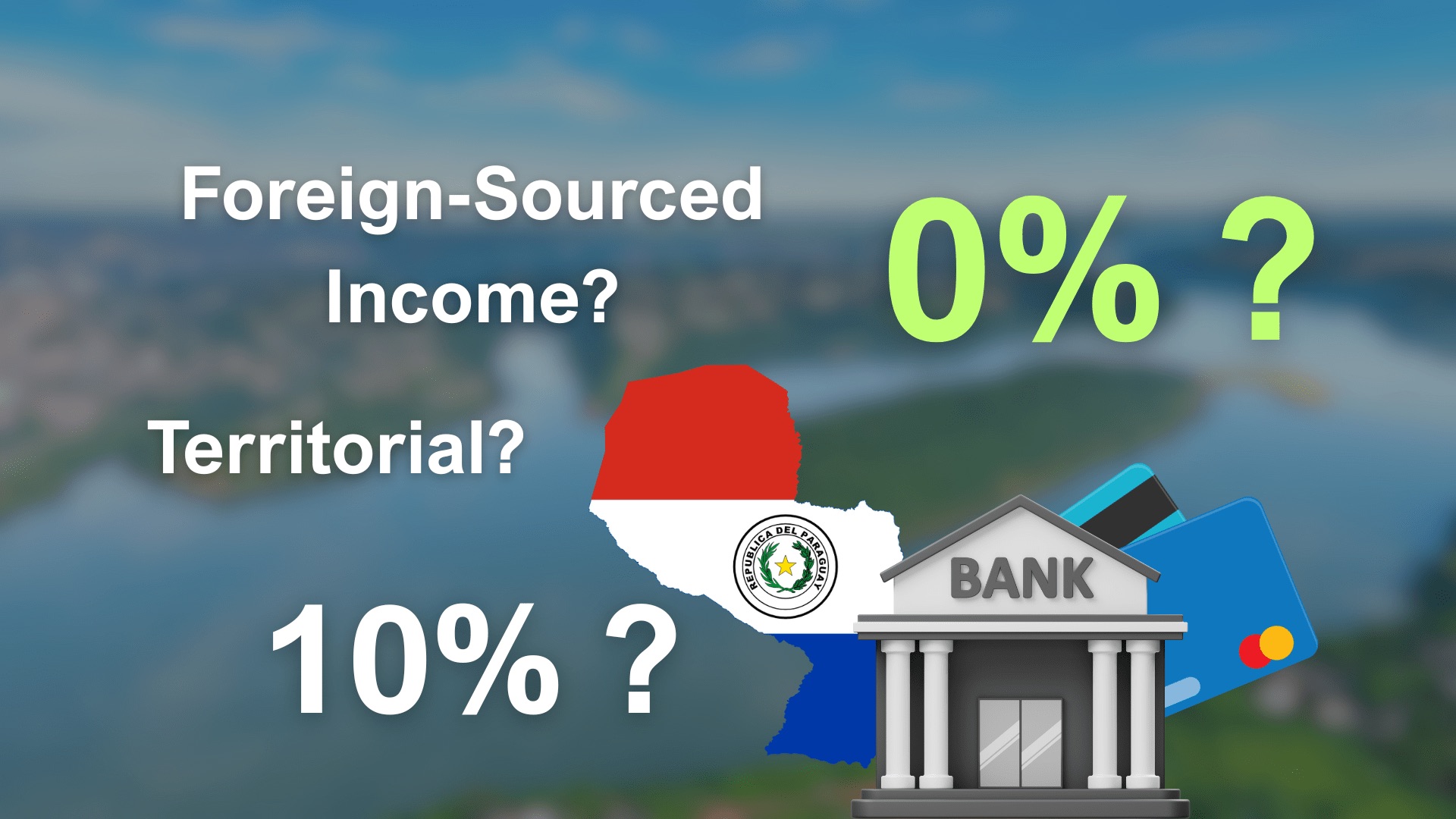
Paraguay's tax system is simple on paper, relaxed in practice, and surprisingly foreigner-friendly. It officially taxes both local and foreign-sourced income, but real-world enforcement tells a different story. If you're self-employed, earning abroad, or considering Paraguay for tax residency, this guide is for you.
1. Locally-Sourced Income
If you earn income from activities performed in Paraguay or from assets or services used in the country, it's considered local-source income and is taxed under the Impuesto a la Renta Empresarial (IRE) or Impuesto a la Renta Personal (IRP).
Examples of taxable local income:
- Selling products or services within Paraguay
- Renting property in Paraguay
- Earning interest from local banks
The IRE rate is generally 10% on net income (after deductions). Employees are usually taxed under IRP with a similar structure.
2. Foreign-Sourced Income
Examples of foreign-sourced income:
- Income from your own LLC abroad, paid into a foreign account
- Dividends from shares in foreign companies
- Selling stocks or crypto on foreign exchanges
- Freelance work performed physically outside Paraguay, for foreign clients
- Royalties, affiliate earnings, or digital sales through international platforms
Paraguay has a territorial tax system, meaning only Paraguayan-source income is taxed. This is established in Article 6 of Law 6380/2019.
So, foreign income is not taxed under IRP or IRE if:
- You performed the work physically outside Paraguay
- You provided services to non-Paraguayan clients
However, if you do remote work for a Paraguayan company, even while abroad, that can be taxable.
In practice:
- Income earned entirely abroad
- Paid into foreign accounts
- Without visible connection to Paraguay
…is treated as non-taxable and left unexamined by the tax authority — provided there’s no evidence of local activity.
Transferring that income into Paraguay may trigger scrutiny from banks (not really the tax authorities), especially if the origin is unclear. It's wise to keep documentation on hand — we soon have a new article coming out about that.
Bottom line: Paraguay doesn’t tax global income — only income with Paraguayan source. This is true in both law and practice.
3. How to Get a Tax Certificate (Comprobante de RUC) as a Self-Employed Person
- Get your Cedula – the ID card
- Go to SET (Subsecretaría de Estado de Tributación) with your cedula
- Apply for a RUC number (Registro Único de Contribuyentes)
- Start issuing legal invoices (facturas)
You can make an invoice to your own foreign LLC or any international client. The invoice doesn't have to be paid. What matters is the paper trail and declared amount.
What most people do: they issue a factura for G. 2.900.000 (approx. $400, which is the Paraguayan minimum wage) as "services rendered". This is enough to generate a tax bill of G. 290.000 (approx. $40).
You only need to pay tax. The point is not maximizing tax but creating official records. It’s a strategy of fighting bureaucracy with bureaucracy.
You can now get a tax clearance certificate (Certificado de Cumplimiento Tributario) anytime from the SET portal.
Need help getting a RUC or handling accounting in Paraguay? Contact me — I work closely with local accountants who assist with this process.
4. Why You Might Want a Tax Certificate
Even if you earn abroad and aren’t technically taxable:
- Banks (especially foreign ones) may ask for tax proof
- Home countries may want to see you’re a taxpayer elsewhere
- It helps you build credibility with local institutions
- You can show "center of life" for residency or non-residency arguments
In other words, it gives you official-looking documents to meet official-looking demands.
5. Voluntary Declaration
Voluntary declaration in Paraguay isn’t about maximizing tax — it’s about building a paper trail you can use to fight bureaucracy with bureaucracy.
Let’s say you’re:
- Getting wire transfers from abroad
- Holding large amounts of cash or crypto
- Asked by a bank or foreign tax authority to explain your income
You now have tools:
- A RUC (tax registration)
- A monthly factura (invoice)
- A tax receipt
- A tax compliance certificate
You can say: “Yes, I provide services. I invoice. I pay taxes. Here’s proof.”
This simple setup — even if you just invoice yourself for minimum wage — becomes a shield. You don’t have to actually transfer money or get paid. You just show taxes have been declared and paid.
And that’s often all you need.
Why does this matter?
- Foreign banks may question unexplained income or balances
- Your home country might require evidence of tax residency abroad
Voluntary declaration gives you just enough visibility to satisfy these demands, without burdening yourself.
You create a bunch of bureaucracy that protects you — and ironically, it works because it’s real. Just minimal.
6. Conclusion
Paraguay creates a rare blend of simplicity, flexibility, and silence. You can stay compliant without overpaying, create a paper trail without moving money, and satisfy institutions without sacrificing freedom. The system works because it’s minimal — and as long as it stays that way, everyone benefits.
You don’t need to overthink it. Just register, declare a bit, pay a little, and carry on.
Got questions? Contact me — happy to help.